


Story:
Earlier this year, I bought my four-year-old niece a globe of the world for her birthday so she could “always find me” whenever I was travelling. Every FaceTime began the same way: “Where are you now, Aunty Shhheerahhh?”
Fast forward to October, after two plane rides and a late-night FaceTime with a sleepy niece I found myself saying, “I’m on my way to Japan to hike the Shionomichi Salt Trail, Neens!”
With the help of my sister, she traced her tiny finger across the globe and pointed out the northern coast of Japan, the starting point of the ancient salt trading route in a town called Itoigawa. She squinted at the map as if she could already see me walking. I explained that Shionomichi literally means “Salt Trail” in English; and it’s a “very old road with very old stories.”
The next nine days of hiking through rural Japan would teach me about the vibrant living culture in the most immersive way possible.
What's so special about the Shionomichi Salt Trail?
The 120 km Shionomichi Salt Road once carried precious salt from the Sea of Japan inland toward Matsumoto before motorised transport exitsed. Today, it’s a multi-day hiking trail that guides travellers through quiet rural communities, cedar forests, sacred sites, and some of Japan’s most impressive mountain scenery.
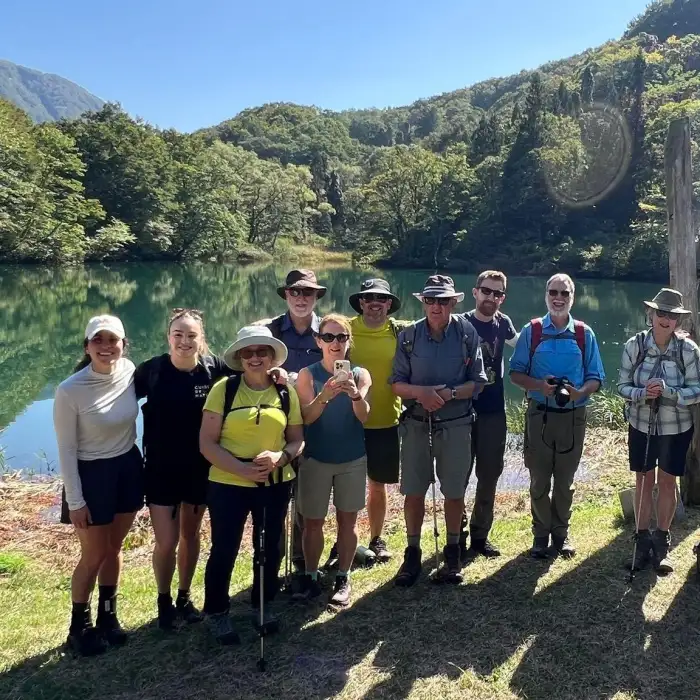
I travelled with Guided By Nature , founded by the award-winning team at Tasmanian Walking Company. I was joined by 11 other guests and two local guides, (Miki-san and Paul-san) who quickly became the heartbeat of the experience.
The experiences that made the Shionomichi Trail truly unforgettable
Food tells the story of rural Japan
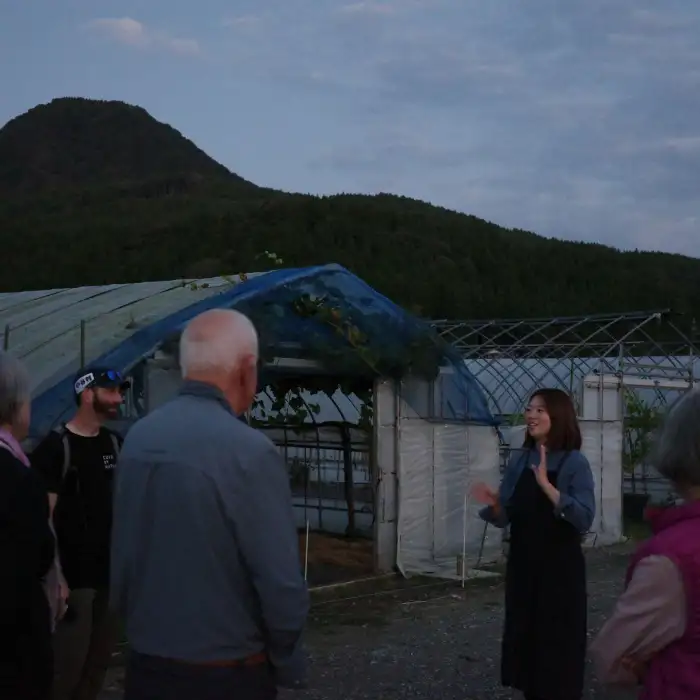
Within hours of arriving on day one, we’d already sighted the official start of the salt road, walked to the top of a local shrine and explored the nearby fish market. That evening we were treated to a private dining experience at Mûrir, described by many in our group as "the best meal we've ever had."
Before dinner, we toured Seikouen Farm, a family-run operation where harsh winters and heavy snowfall create ideal conditions for rice cultivation. The 13-course degustation showcased locally grown rice, freshwater fish, mountain vegetables, foraged herbs and even soft-shell turtle which I later had to confess to my horrified niece over FaceTime.
Every meal on this journey was more than food. It was culture, geology and history served on hand-made local pottery.
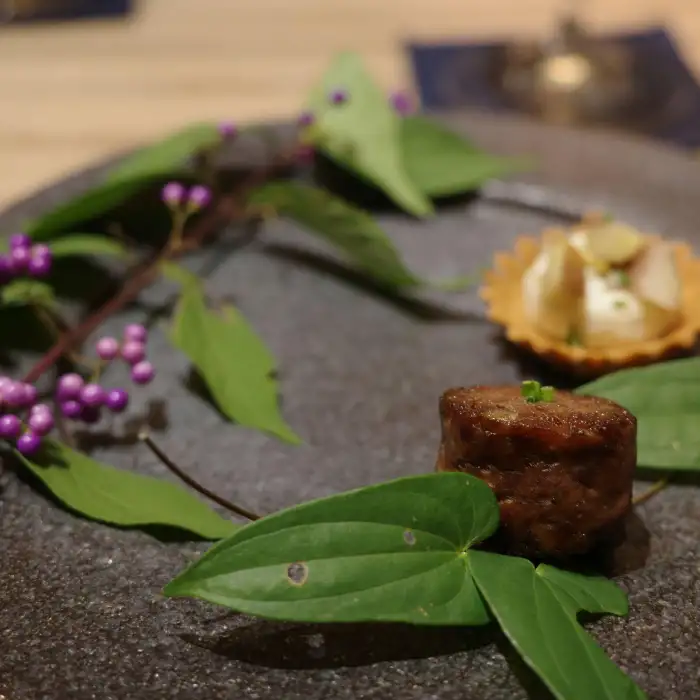
From bento boxes delivered to the Fossa Magna Museum during a rainstorm, to a monk’s wife preparing our lakeside lunch, to mochi and mountain tea offered in a family home, each meal was an incredible story and a new connection to the salt road.
And then there was the sake...
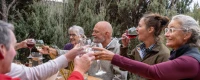
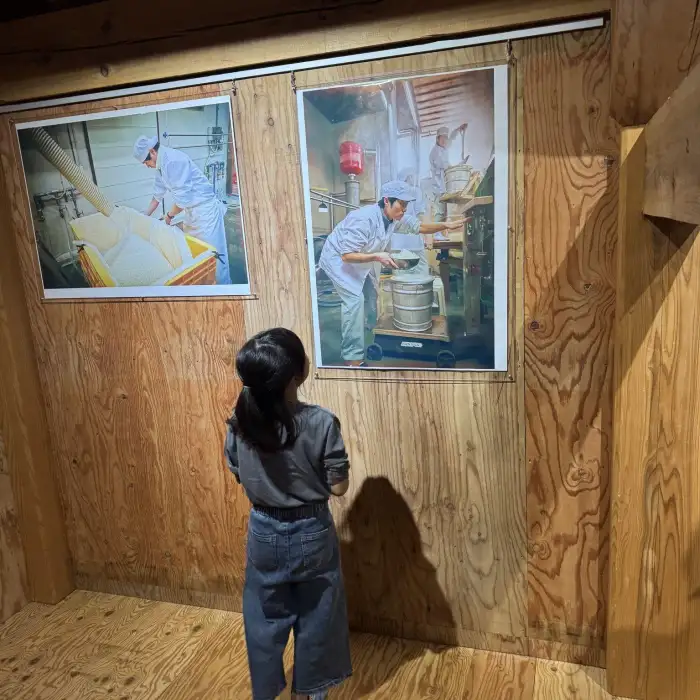
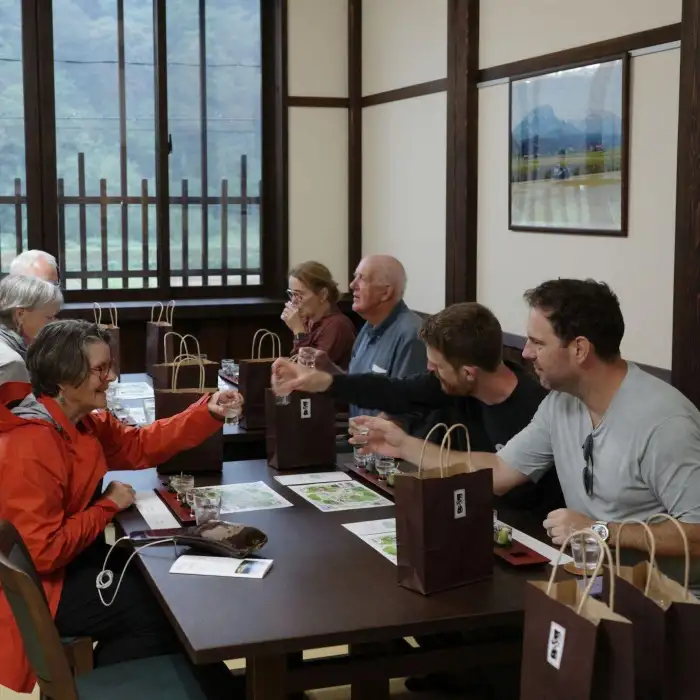
At the family-run brewery (the only one in Japan growing all its own ingredients) the brewer’s granddaughter proudly guided us through the gallery of photos of her father and grandfather. The head brewer explained that the secret ingredient was water drawn from a multigenerational well shaped by tectonic movement, while we sipped on the tasting paddle in front of us.
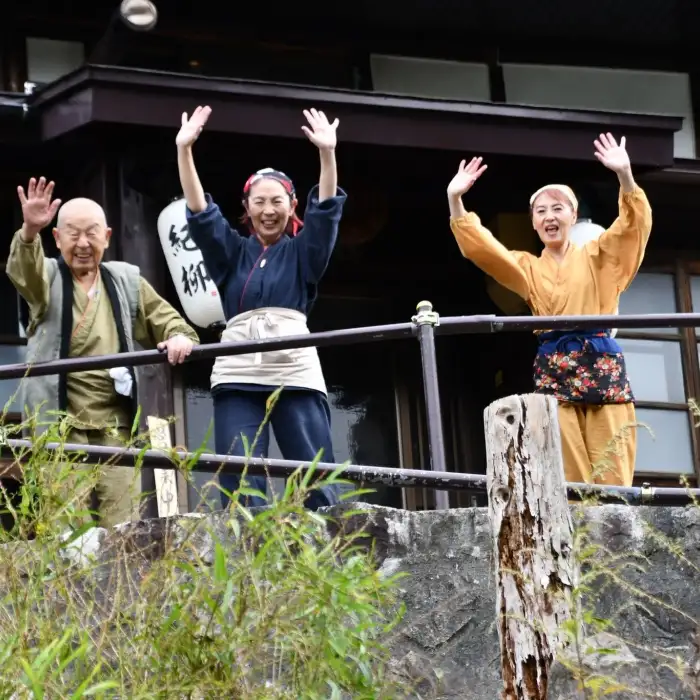
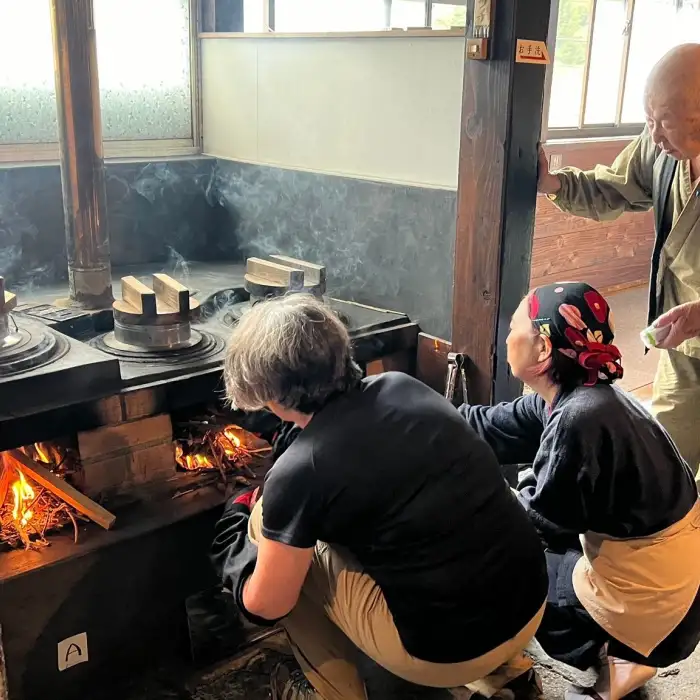
Lunch on day five gets a special mention, we joined the locals and learned the traditional method of cooking rice (which is far harder than it looks). Broken down into groups of four combined with a little friendly competition, we eventually produced fluffy/burnt pots of rice that became the hero ingredient of a shared feast. The 88-year-old owner of Kiryi eagerly showed us old family albums and demonstrated the use of family heirloom tools without a word of English.
If it wasn’t for the many kilometres of walking between meals, this could have easily been a food tour of rural Japan.
Walking the Shionomichi: Diverse Trails and Mountain Terrain
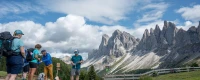
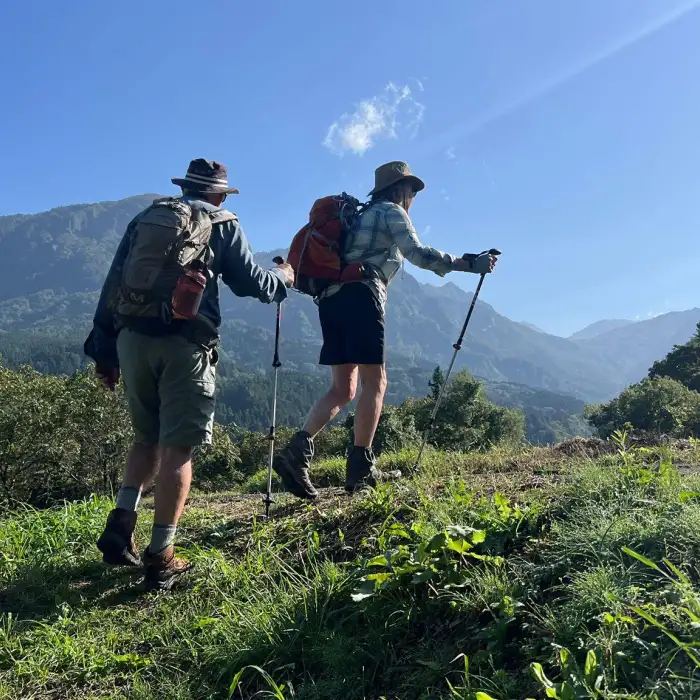
The Shionomichi offered the most diverse walking I’ve experienced on any multi-day journey. One moment we were moving from settlement to settlement; the next, crossing waterfalls beneath towering cedar forests.
My favourite day was the ascent over the Oami Pass (day three), made even more adventurous by the previous day’s heavy rain. To start the morning, we tried on a 56kg “bokka” salt pack for size at the Nechi Valley Museum, to demonstrate the weight that Japanese ancestors carted along the trail towards Matsumoto only centuries earlier.
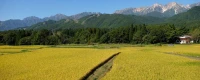
The trail climbed slowly at first, offering views of rice fields against the Japanese Alps as the backdrop. We snacked on native plants from Paul’s impromptu “trail tasting menu” which included cocoa leaves, peanut butter leaves and berries with questionable aftertastes.
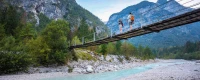
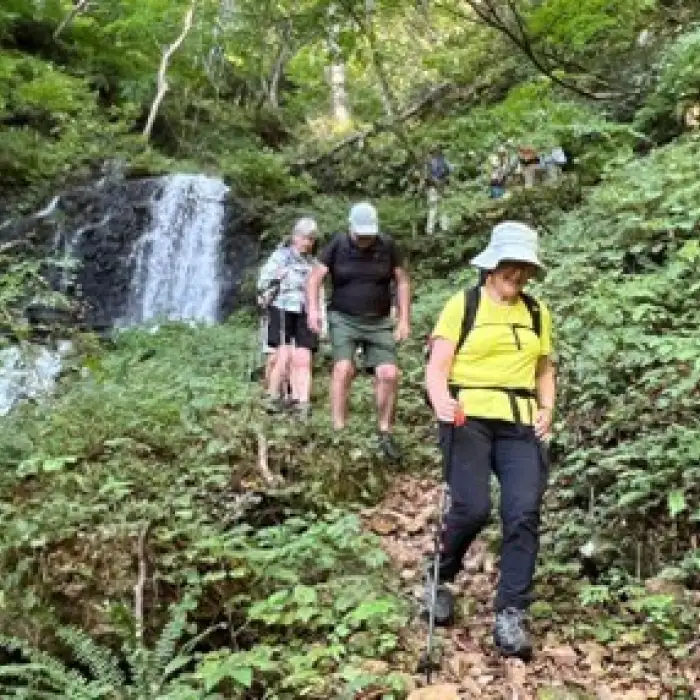
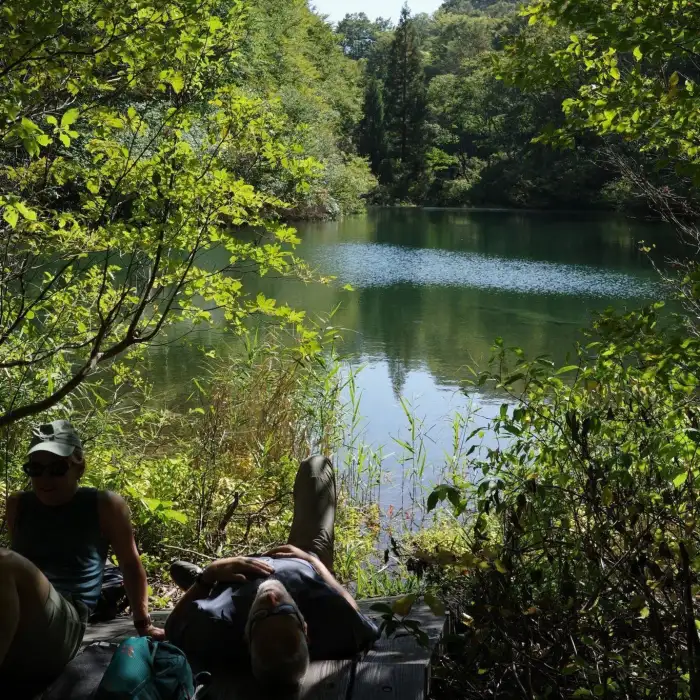
After a stunning lakeside lunch spot, we tramped through waterfall crossings, incredible tall cedar forests, and scrambled over slick rocks, our group quickly learned to embrace wet socks, shoes and burning calves.
Paul, balancing bear spray and incredible patience, led us safely to the end of the trail, his knowledge of the history, flora, fungi and folklore kept us moving at a steady pace throughout the day. By early afternoon, we all gave up trying to keep our feet dry, but the thrill of the trail conditions kept spirits high and getting us to Oami Tsui-no-ie where we enjoyed some home brewed tea and mochi with a family of the local village.
A Personal Encounter at a Local Shrine
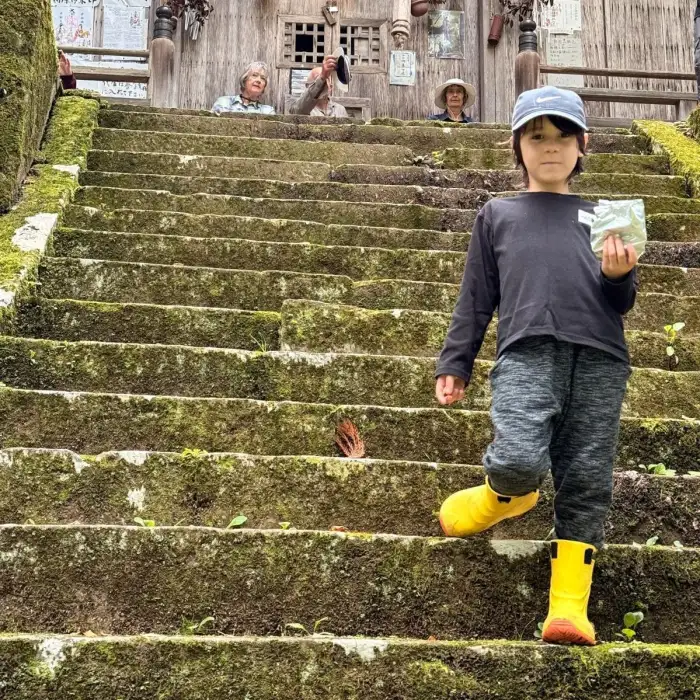
Ancient Shrines and Temples line the Shinomichi trail, our Japanese guide, Miki-san, explained Shinto (indigenous religion of Japan) in a way that made everything click. Shinto teaches Kami, or spirits present in all things, live in rocks, rivers, trees, and mountains. The belief is humans aren’t separate from nature; we’re part of the same ecosystem. After just a few days of walking the trail, seeing how carefully gardens were tended and how the community cared for their local shrines…I believed it.
We finished one of the walking days at Paul’s local Shrine, where his wife and two young kids welcomed us warmly. Seeing the pride on their faces as we sat in silence and admired the sacred site was one of the most profound moments of the trip.
The Magic of Onsens
I’ll be honest, the idea of stripping naked in front of strangers felt confronting at first, but after the initial awkwardness I realised that it’s another way that the Japanese connect with nature and their living culture. Hadaka no tsukiai, or naked socialising, suddenly made perfect sense.
Wash. Soak. Reset. This ritual in the gender-separated onsens soon became the highlight of my evenings and was the perfect remedy for sore feet and legs.
By night two, I was an Onsen convert.
By night three, I was wondering where I could build one at home.
And then there’s the people you meet...
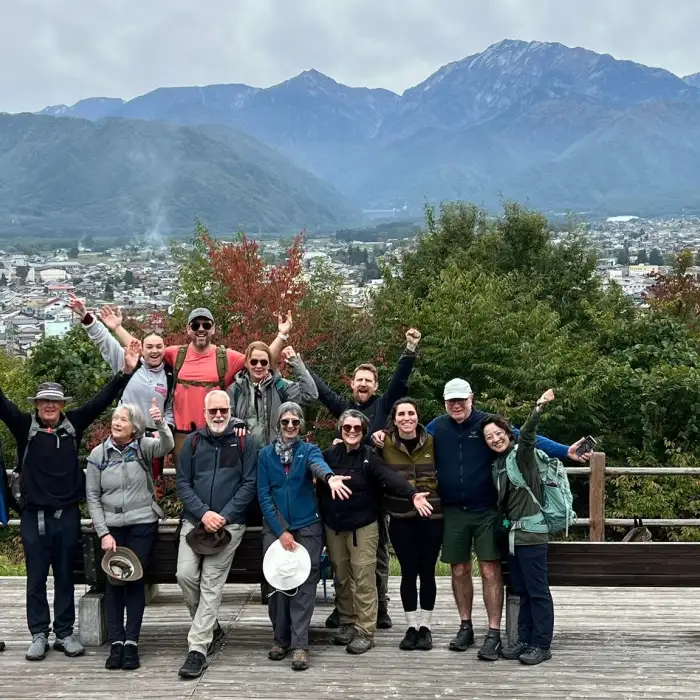
Our group of twelve arrived in Japan as complete strangers. We were an odd bunch spanning decades in age, coming from careers that couldn’t be more different. On paper, we didn’t make sense together at all and yet walking has a universal way of dissolving those differences, in the most unexpected ways. Conversation flows more easily on the trails, and the most interesting chats always seem to happen towards the more challenging parts of the day - a distraction perhaps!
By day three, we already had our own inside jokes (mostly thanks to the karaoke performances the evening before) and each night became a ritual of recapping the day’s best and most hilarious moments.
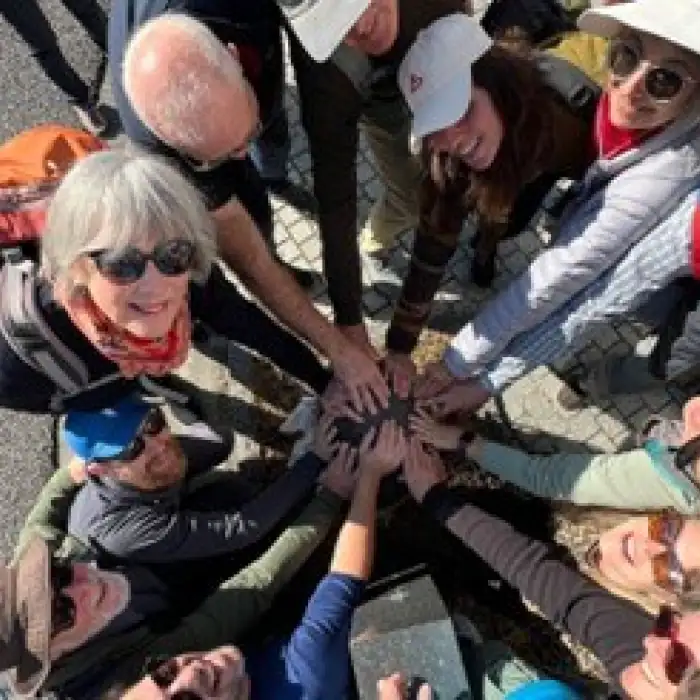
By day five, we felt less like a tour group and more like a temporary family stitched together by the salt road. We knew each other’s walking pace, snack preferences, injuries, onsen comfort levels, and sometimes even bowel movements.
On the final morning of the trip, no one rushed to leave.
Our What’s App group is still active with a steady stream of updates from a group of unlikely friends who shared a once-in-a-lifetime journey.

Lessons in travel
Nine days on the Shionomichi Salt Trail gave me more than a passport stamp and a few thousand steps on my Garmin. It gave me a true connection with Japanese culture, food, ritual and landscape.
There is so much to learn from the quiet generosity of Japanese hospitality.
When I returned home, my niece spun her globe again and asked, “Where are you now, Aunty Shhheerahhh?” This time, I pointed to our tiny Island home of Launceston, Tasmania.
As she drifted off to sleep with her kids atlas tucked under her arm, I found myself recounting stories of ancient trails, cedar forests and the magic of the salt road, stories I know she’ll ask me to tell again.
You can download the full itinerary here